Delivered on time



What makes a care home interior feel premium?
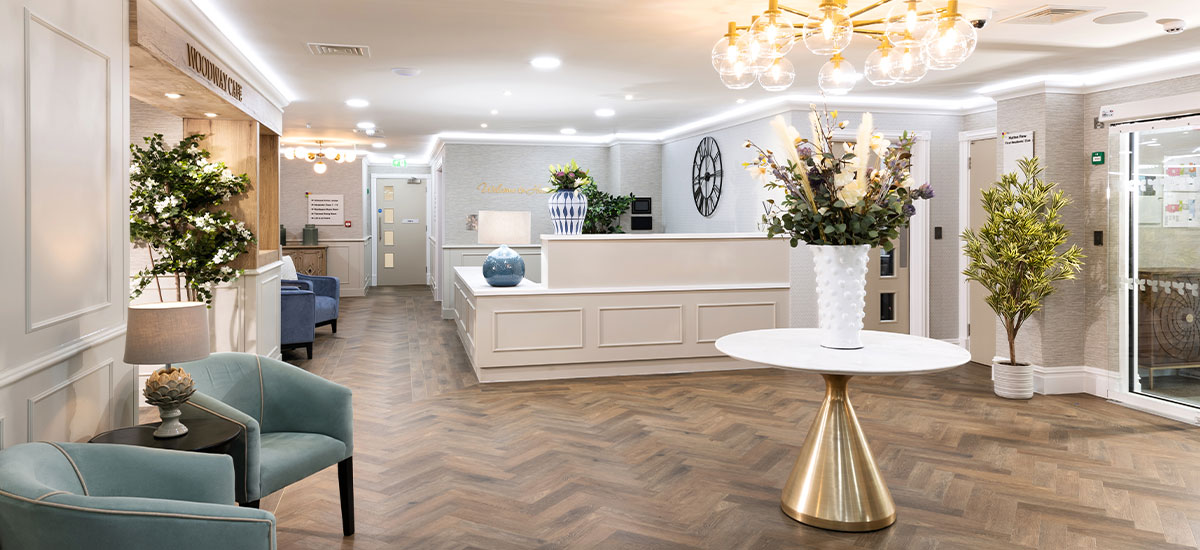
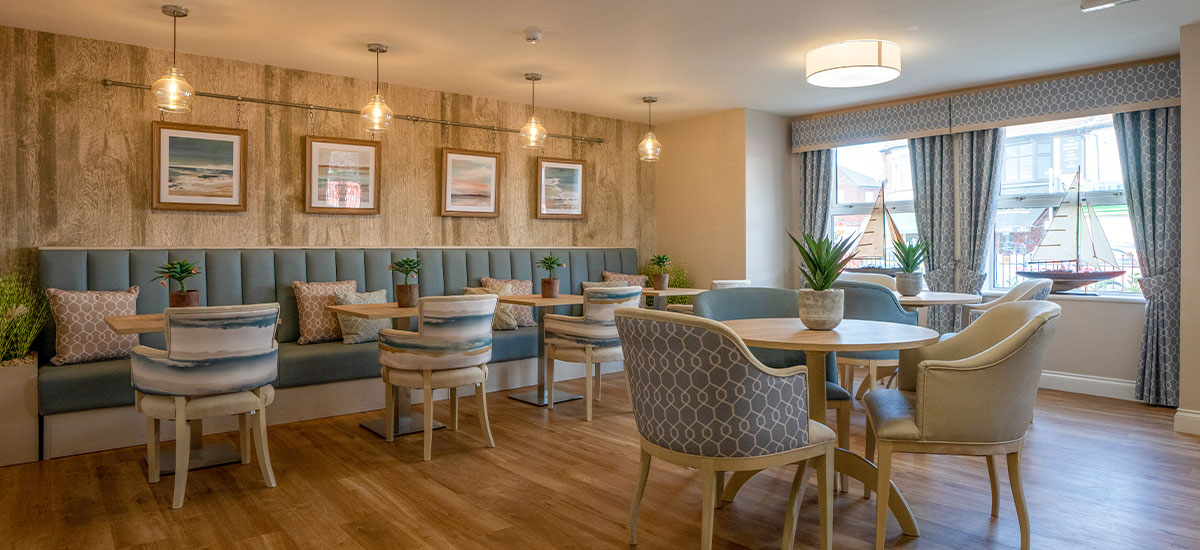
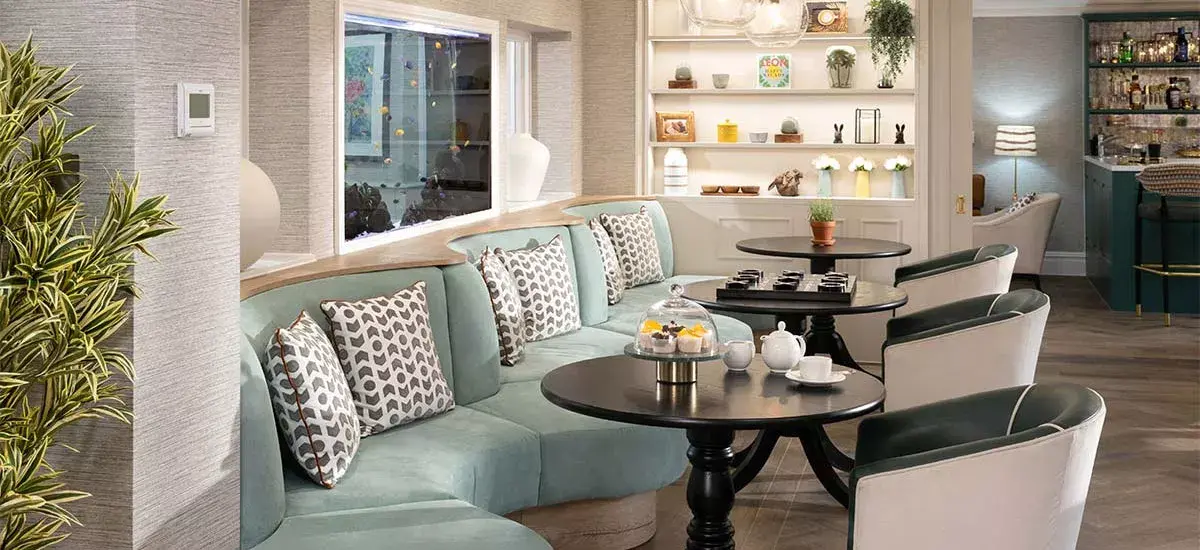
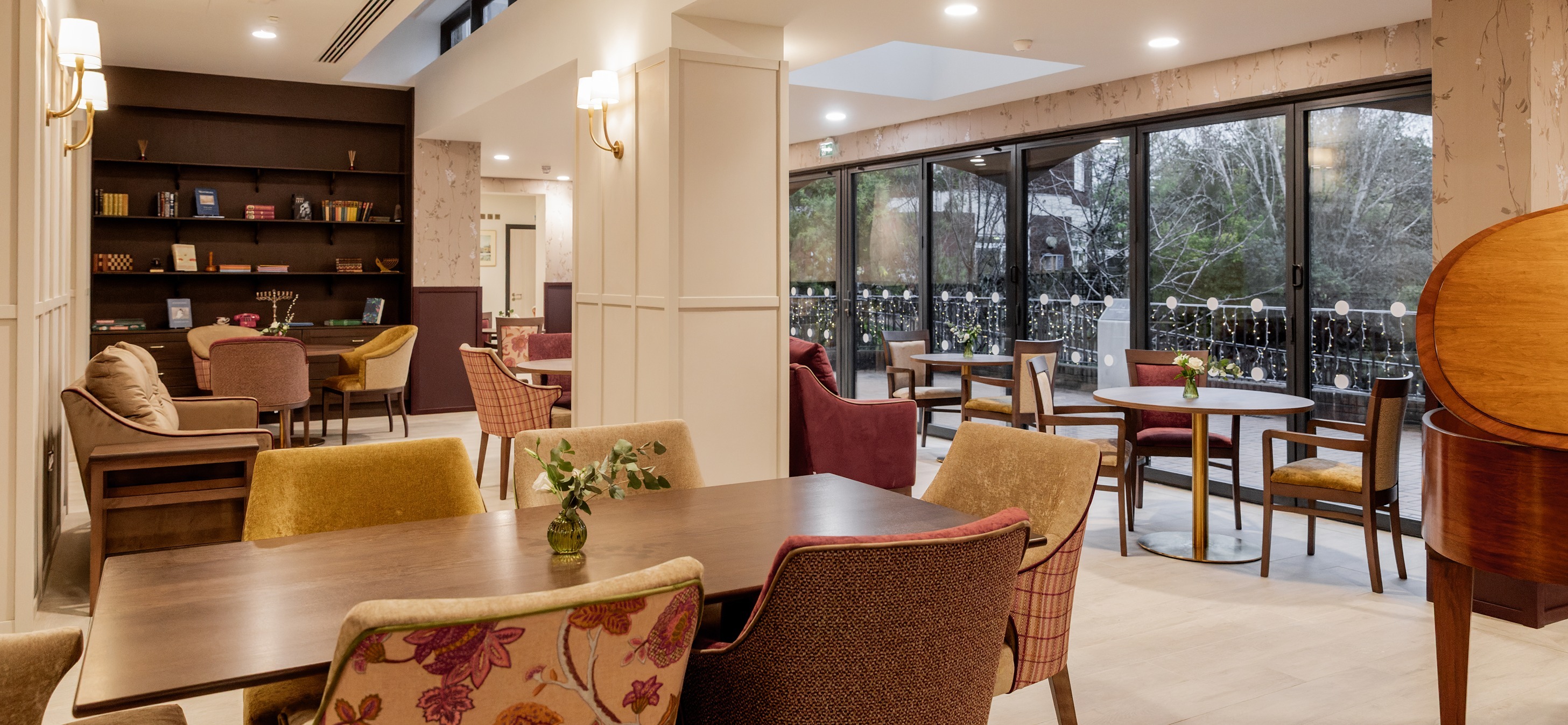
A premium interior rarely comes down to one expensive finish. It is the consistency that people notice: furniture proportions that work together, fabrics and curtains that feel connected, and spaces with a clear purpose.

In a care home, that consistency has to do more than look good. The surroundings should feel welcoming to residents and families, while giving staff the space and confidence to support everyday routines. Good care home interior design brings together four things:
- a clear and coordinated visual scheme;
- comfortable, supportive furniture;
- materials suited to the demands of each area; and
- a layout that works for residents, staff and visitors.
Get these choices working together and practicality becomes part of the design, not a compromise added later.
Start with how each space is actually used
The right specification for a reception area will not necessarily be right for a dining room, bedroom or high-use lounge. Before choosing products, consider who uses the space, how frequently it is used and what staff need to do there.
A useful room-by-room brief should cover:
- resident mobility and the level of support required;
- frequency and type of cleaning;
- likely spill and contamination risks;
- how furniture may need to be moved;
- circulation routes and access for mobility aids;
- maintenance and replacement requirements; and
- the atmosphere the space should create.
This prevents a scheme being driven by appearance alone. It also avoids over-specifying every area in the same way, which can add cost without improving the resident or staff experience.
Choose durable furniture without creating an institutional feel
Durability is about more than selecting a hardwearing fabric. Frames, joints, seat construction, cabinet surfaces and replaceable components all influence how furniture performs over time.
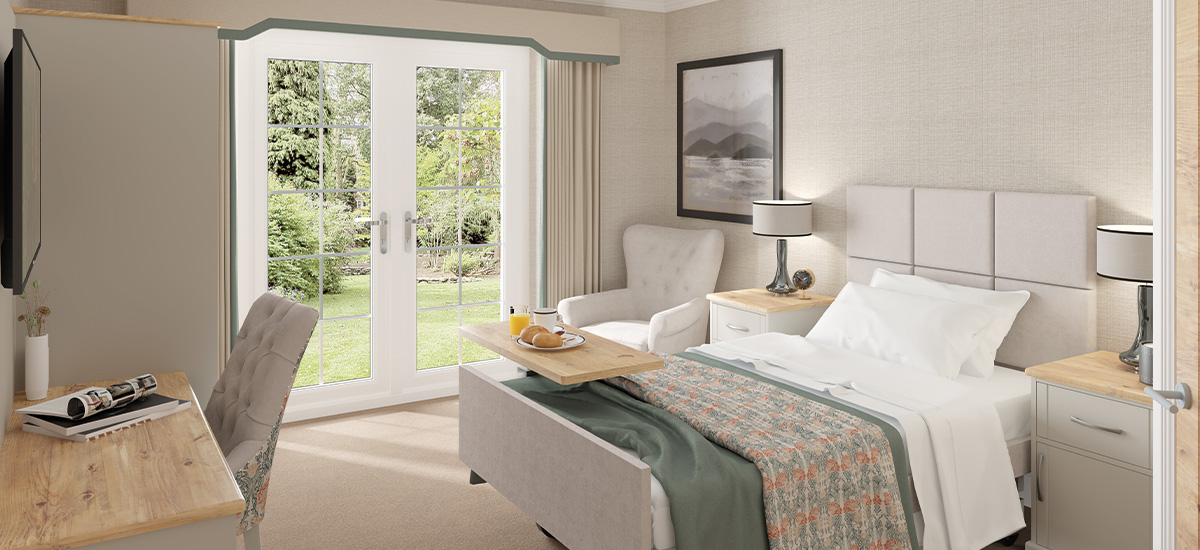
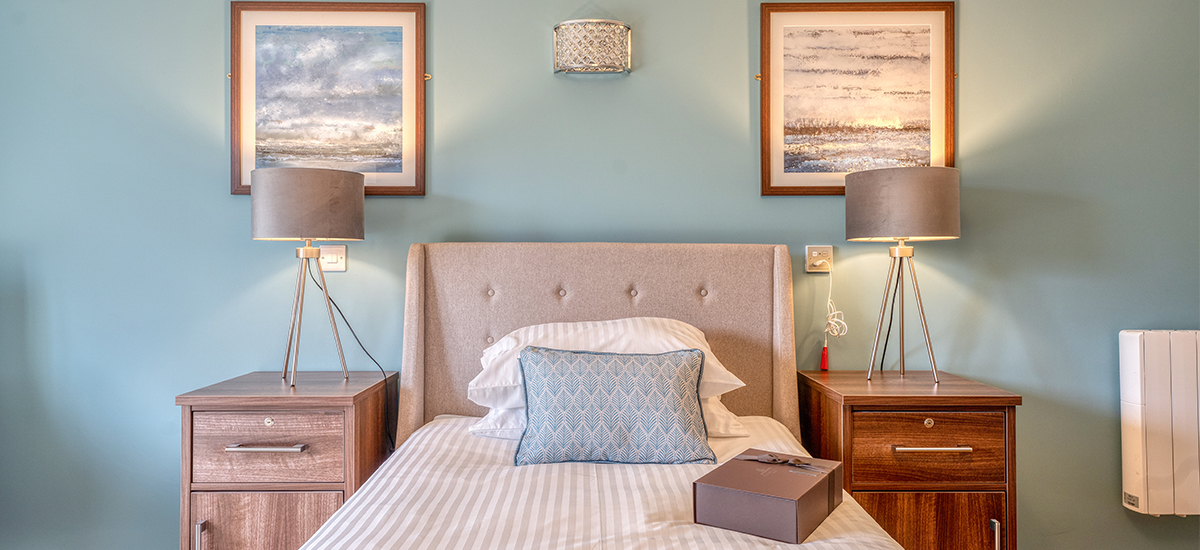
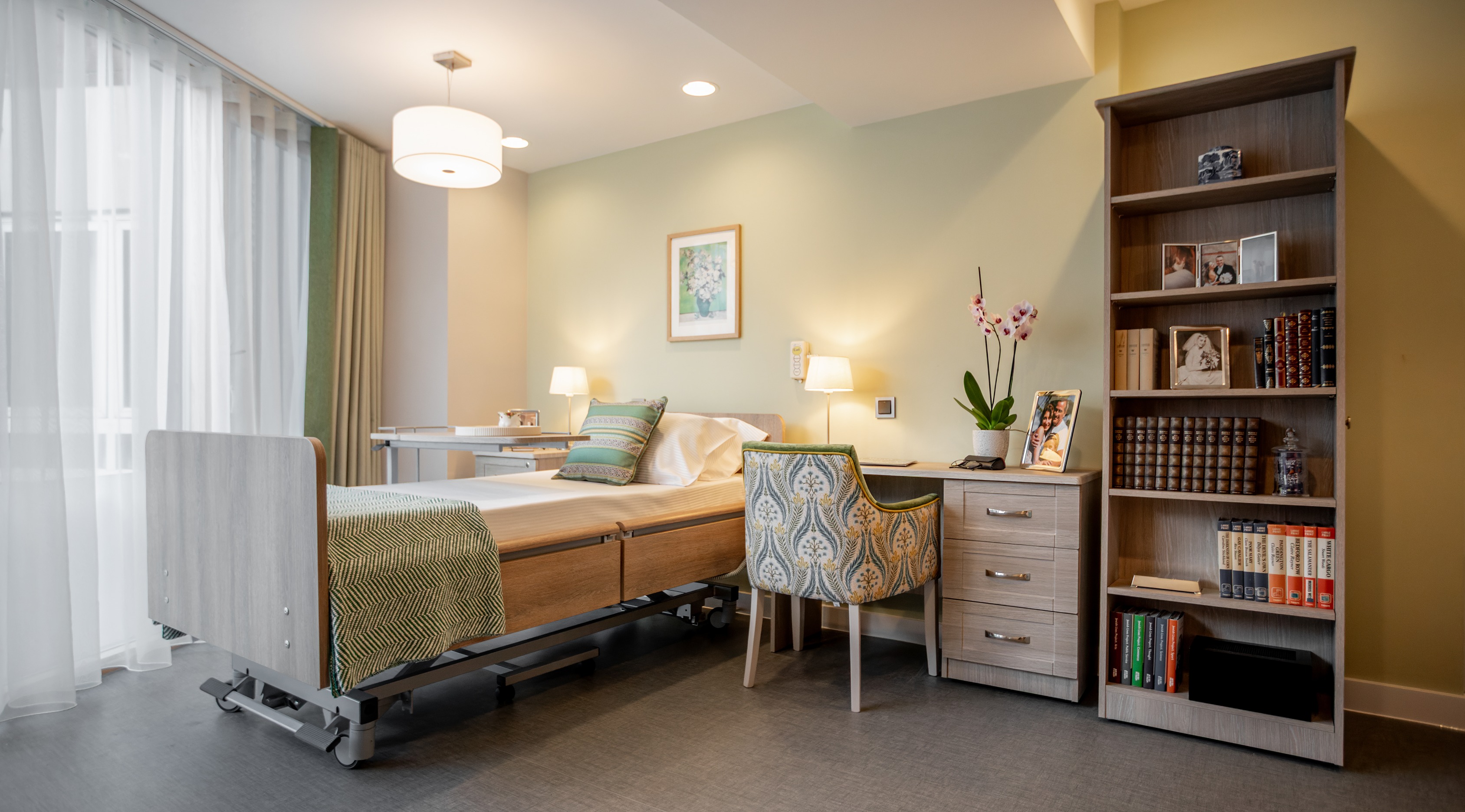
For upholstered seating, consider the level of support, seat height, arm shape and the ease with which residents can sit down and stand up. A chair can look elegant while still offering the stability required in a busy care environment. The same principle applies to bedroom furniture: warm finishes and considered detailing can create a softer look, while robust construction and practical storage support daily use.
Ask what can be repaired, recovered or replaced individually. Being able to deal with one damaged component rather than replacing the whole item may offer better long-term value, particularly across a larger care group. Warranty terms matter too: Edison & Day furniture is covered by a five-year warranty against faults caused by materials or manufacture, subject to the published exclusions.
Specify fabrics by performance, not appearance alone
Fabric is one of the quickest ways to add depth, character and a more premium feel. It is also one of the areas where an unsuitable choice can cause the greatest operational frustration.
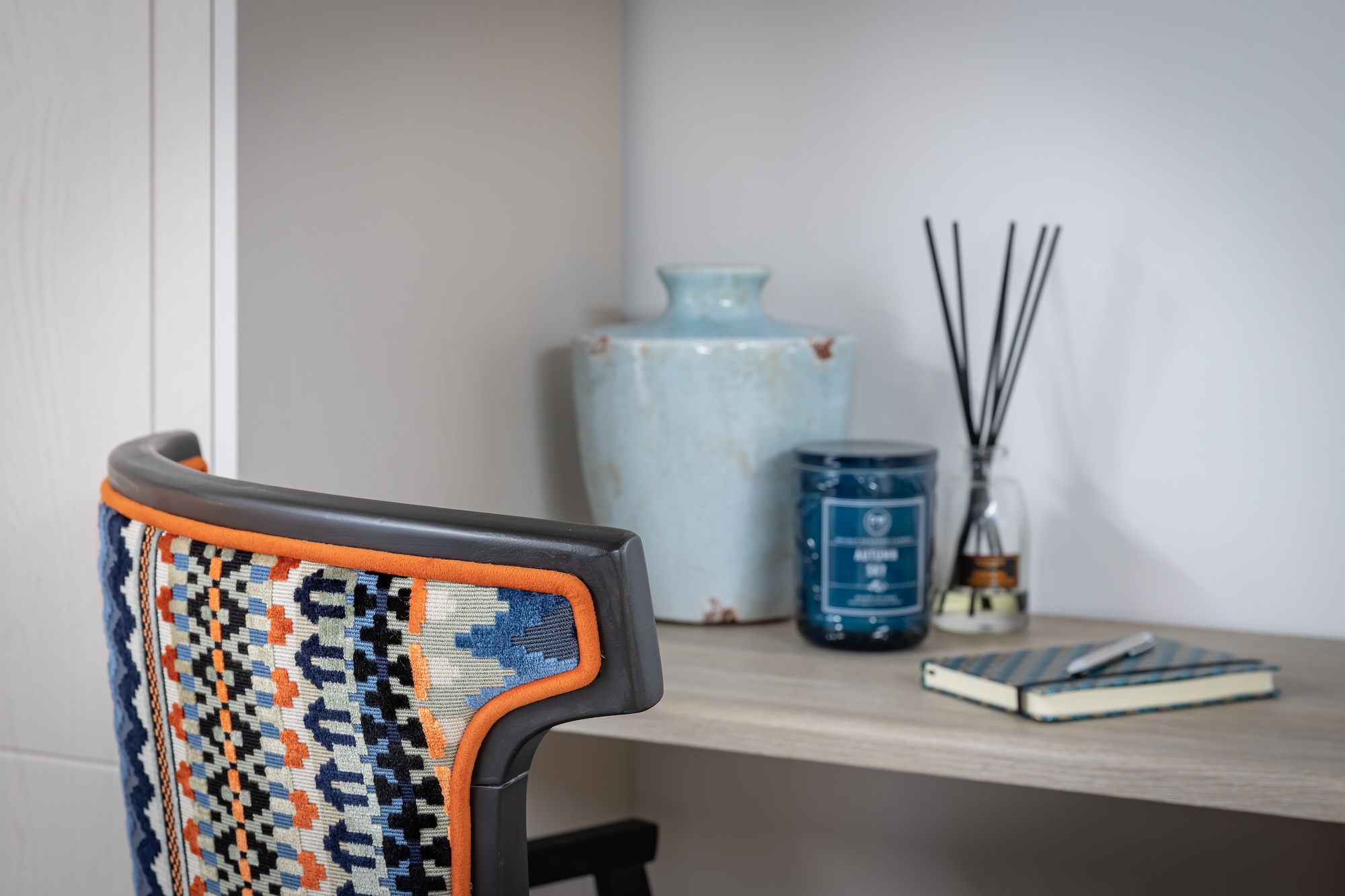
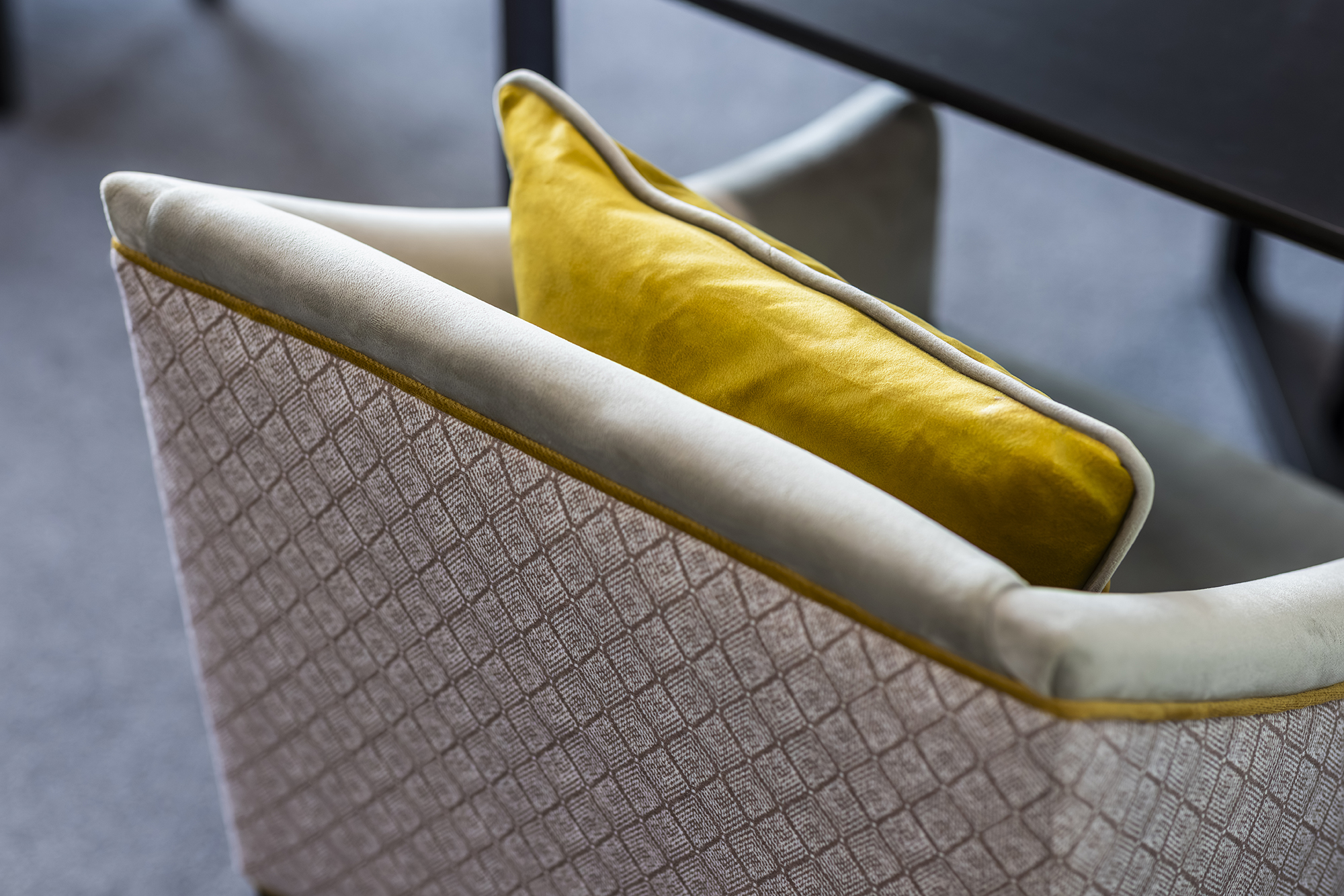
The answer is not to use one surface everywhere. Instead, match each material to its location. A higher-risk seat may benefit from a waterproof, wipe-clean upholstery, while other areas can introduce softer textures and pattern. Combining materials on the same piece - for example, a practical seat with a tactile patterned outer back - can balance cleanability with a less clinical appearance.
Always check the individual fabric specification, including:
- fire-performance certification for the intended end use;
- abrasion resistance, often reported as a Martindale rub count for textile fabrics, and suitability for the intended level of contract use;
- waterproof or moisture-resistant properties where required;
- resistance to the cleaning products used by the care team; and
- the manufacturer’s cleaning and maintenance instructions.
Martindale is a common way to compare the abrasion resistance of textile fabrics. The result is reported as the number of rubs reached at a defined test endpoint, so a higher figure generally indicates greater abrasion resistance within that test. It is not a complete measure of suitability, and coated fabrics may be assessed differently. Cleaning compatibility, moisture resistance, fire performance, seams and the intended location still need checking.
Avoid relying on a general label such as “wipe clean”. The correct method varies by material, coating and supplier. The government’s infection prevention and control guidance expects care providers to have suitable cleaning and decontamination arrangements; the specification needs to support the home’s own risk assessment and procedures.
Fire performance should be checked in the same product- and location-specific way. Our guide to UK care home furniture fire safety explains the principal standards and why the intended end use and the provider’s fire risk assessment matter.
Use soft furnishings to coordinate the whole scheme
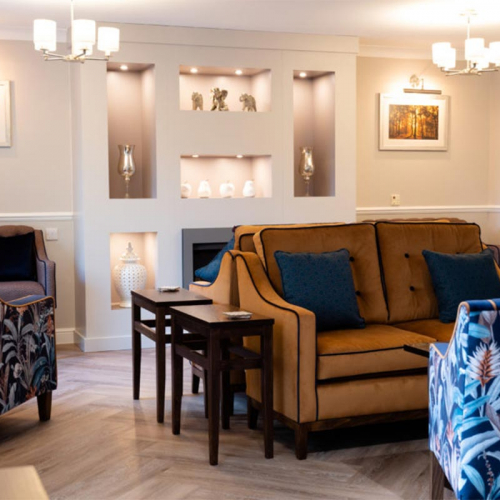
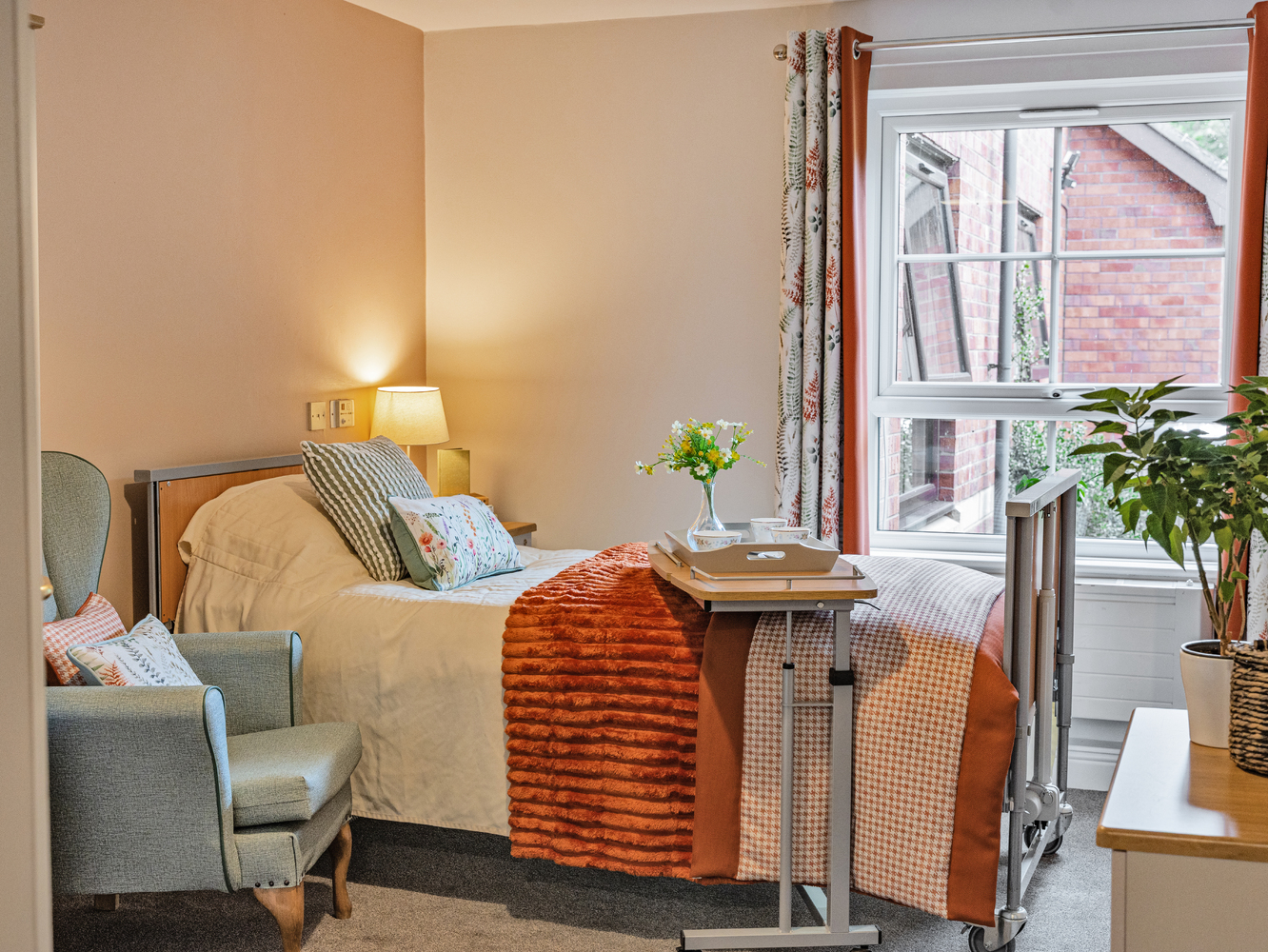
Curtains, blinds, cushions and other soft furnishings can make a practical room feel finished. Repeating a colour or pattern across upholstery and window treatments creates continuity without requiring every item to match.
They also need the same level of technical consideration as furniture. Window treatments should be specified for their setting, with appropriate fire performance, a manageable cleaning method and hardware suited to repeated use. Where future replacement matters, retain clear records of the approved fabric, colourway, heading and finished dimensions. For Edison & Day products, follow the care instructions supplied with the order and the relevant soft-furnishings cleaning guidance.
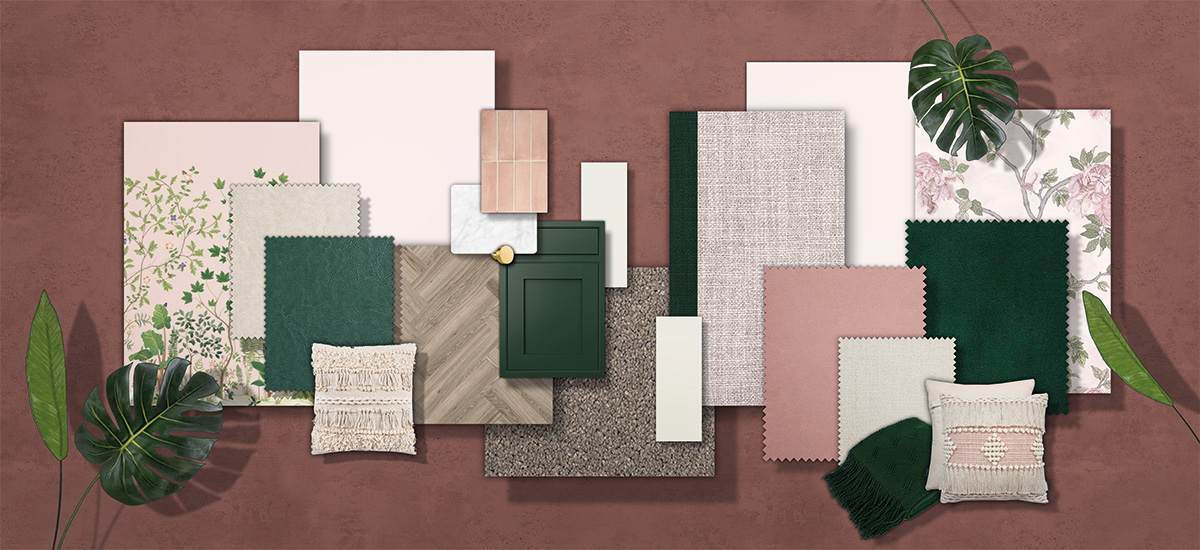
This is especially valuable across multi-site programmes. A controlled palette and an agreed set of products can create a recognisable standard while still allowing each care home to retain its own character.
Build cleanability into the details
Easy-to-maintain interiors depend on construction as well as surface material. Smooth cabinet finishes, accessible spaces around furniture and fewer dirt traps can make routine cleaning more straightforward. Removable seat cushions may provide better access for deep cleaning, provided they are suitable for the setting and can be handled safely.
Before approving a product, ask:
- Can staff reach the areas that need to be cleaned?
- Are seams, piping and joins suitable for the expected level of use?
- Can the surface tolerate the home’s approved cleaning products?
- Are care instructions available for the housekeeping team?
- Can damaged components be replaced without replacing the whole item?
These small decisions protect both the look of the scheme and the time staff spend maintaining it.
Use colour and contrast with purpose
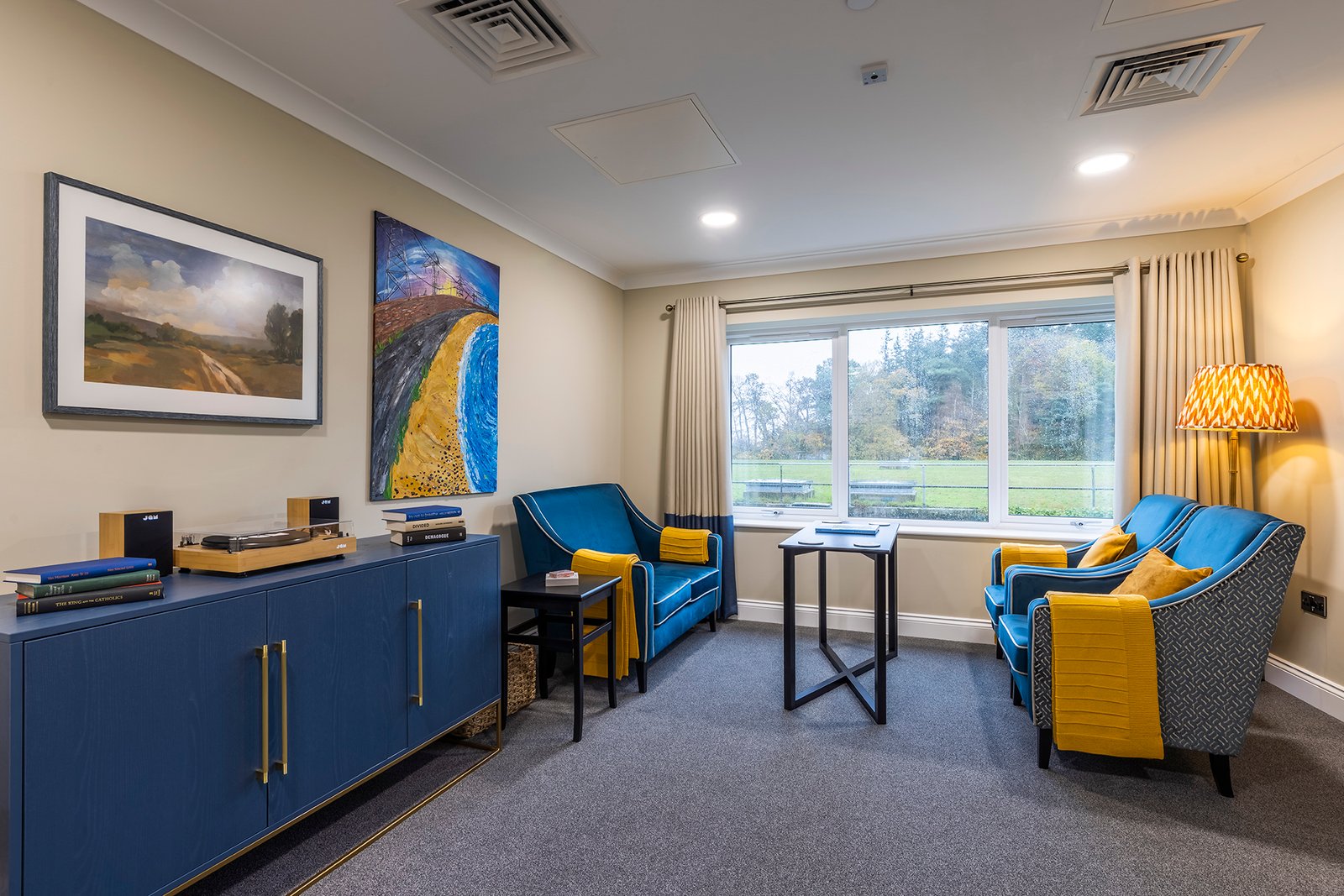
Colour can add personality, but it also has a practical role. Clear tonal contrast can help residents distinguish furniture, doors and important features from their surroundings. It can support wayfinding and make a space easier to understand, particularly for people living with sight loss or dementia.
NHS guidance on dementia-friendly health and social care environments highlights the importance of contrast, legibility and avoiding visual confusion. In practice, that means looking at the relationship between adjacent surfaces rather than choosing colours in isolation.
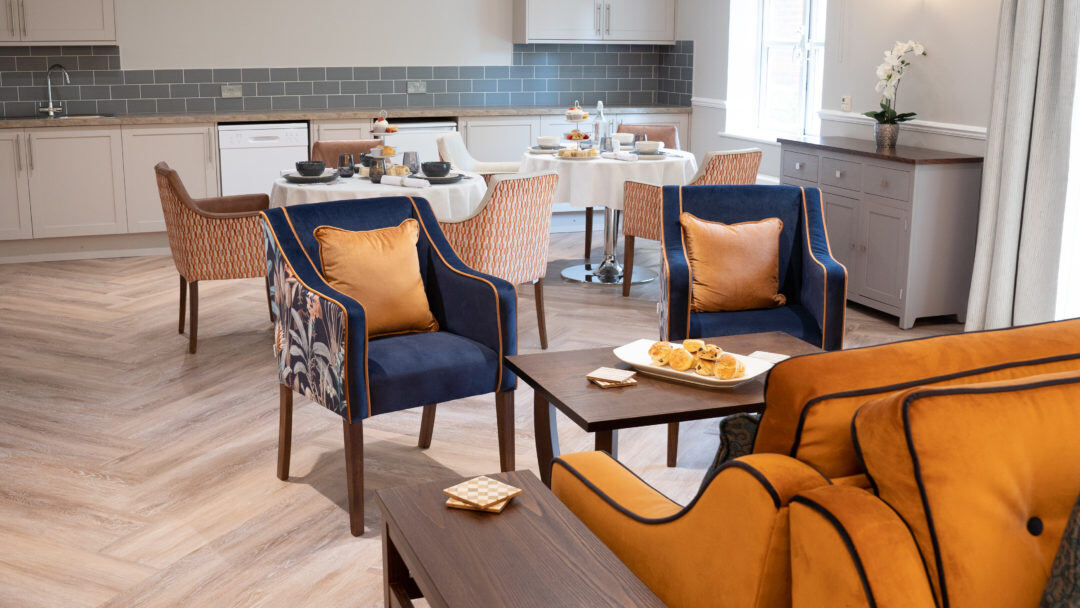
Contrast does not need to be stark or institutional. A chair can stand out clearly from the floor while still sitting comfortably within the wider palette. Doors that residents need to identify can be emphasised, while staff-only doors may be less prominent. Large, high-contrast patterns or abrupt flooring changes should also be considered carefully, as some residents may interpret them differently.
In practice: At Nightingale House, selected chairs used contrasting piping to make their outlines easier to recognise for residents with sight loss. Familiar furniture forms were retained, while residents and team members could respond to mood boards showing the proposed colours and fabrics. The result was not contrast applied as a rule, but a scheme shaped around the people using the space.
Plan layouts around comfort and daily operation
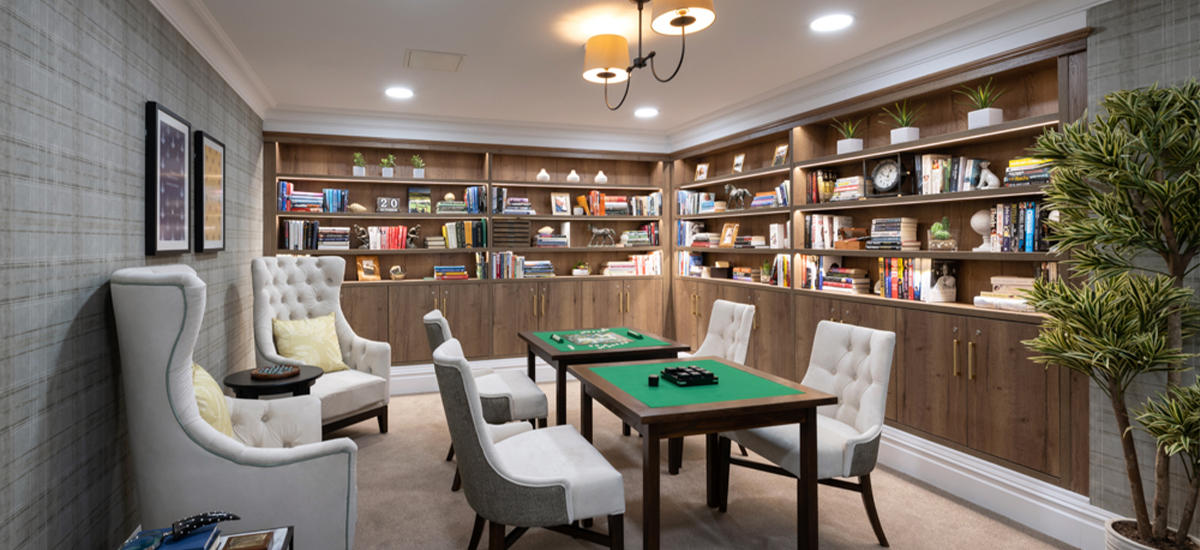
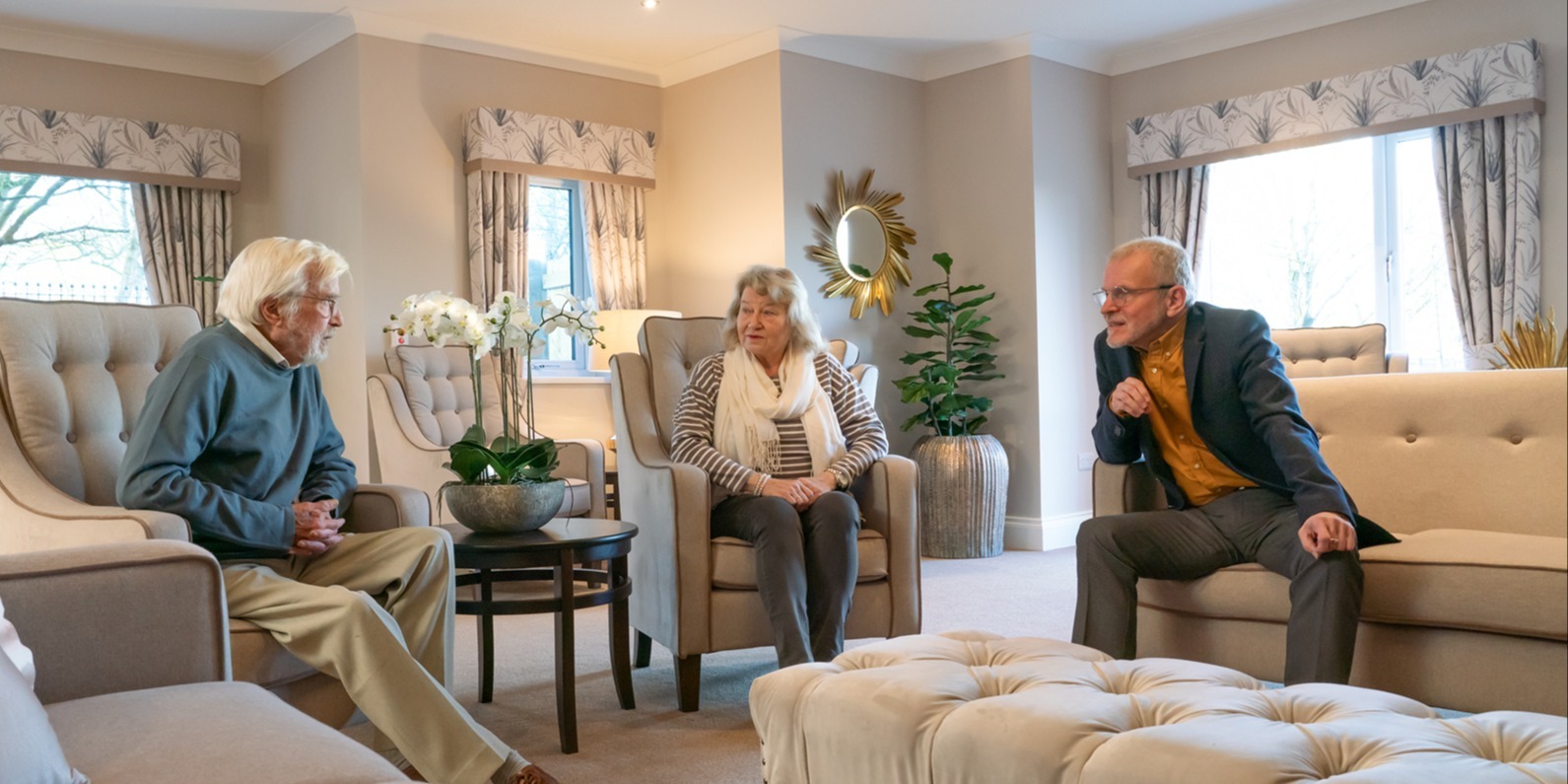
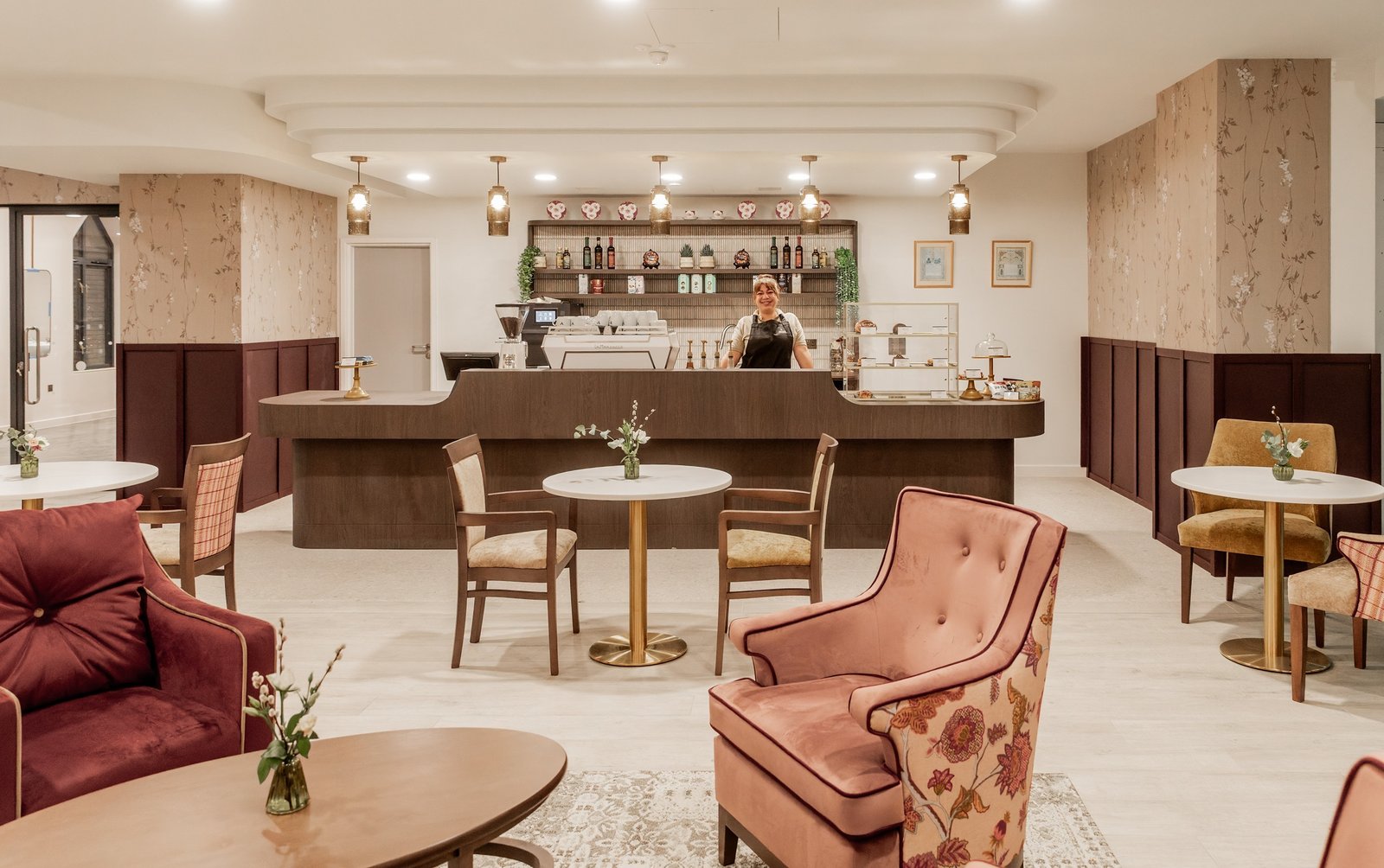
A luxurious care environment is shaped by how the room works, not only by what goes into it. Overfilling a lounge can undermine an otherwise strong scheme. Clear circulation, sensible spacing and varied seating arrangements often make a room feel calmer and more generous.
Consider a mix of settings rather than one large arrangement: smaller conversational groups, quieter seats and space for residents to sit with visitors. Check that tables are reachable, mobility aids can be accommodated and staff can support residents without repeatedly moving furniture.
Where possible, test a layout or sample products with the people who will use them. Feedback from residents, care teams, housekeeping and maintenance colleagues can expose practical issues before a wider rollout.
In practice: The RCH Brentwood Care Centre refurbishment was delivered in phases while the home remained operational. The revised communal areas were designed to improve flow and create a more connected environment. After completion, the home manager reported that a visiting CQC inspector had noticed more interaction and movement among residents. The dementia unit, which had previously been difficult to fill, reached more than 70% occupancy within 12 months. Interior design was not the only factor in either outcome, but the project shows why layout, phasing and day-to-day use should be considered together.
How can care groups keep premium interiors consistent across sites?
Consistency comes from controlling the specification, not making every care home identical. An approved family of furniture, fabrics and finishes can provide a dependable starting point, with selected variations to suit the building, resident profile and local identity.
For a multi-site operator, record the details needed to order accurately: product codes, dimensions, finishes, fabrics, fire-performance information and approved alternatives. This helps prevent specification drift and makes future replacement easier.
Working with a supplier that can coordinate upholstered furniture, cabinet furniture, dining products and soft furnishings can simplify this process. It reduces the number of handovers and makes it easier to resolve how different elements sit together before products arrive on site.
In practice: Across Hartford Care’s Tegfield House, Alton Place and Moorhill projects, Hartford Care, 3 over 5 Design and Edison & Day used consistent colour palettes, materials and finishes to create continuity. Textures, artwork and furniture then gave individual areas their own identity. The specification also allowed for different resident needs rather than treating one chair or layout as suitable for everyone, with durability, ergonomics and budget considered alongside the overall look.
A practical checklist for premium care home interiors
- Brief by room: define the users, risks, cleaning regime and operational needs.
- Prioritise comfort: check support, proportions and ease of use, not just appearance.
- Verify materials: review fire performance, durability and cleaning compatibility for the intended setting.
- Coordinate selectively: repeat colours and finishes without making the scheme feel uniform.
- Use contrast deliberately: support recognition and wayfinding while avoiding visual confusion.
- Design for maintenance: consider access, replaceable components and future reordering.
- Test before rollout: involve the teams and residents who will live with the specification.
Creating interiors that continue to work
Premium care home interiors do not have to trade practicality for style. The strongest schemes build durability, cleaning, comfort and accessibility into the brief from the beginning, then retain enough control to maintain the agreed specification over time.
Refreshing a space or putting a scheme together now? Talk to the Edison & Day team about coordinated furniture and soft furnishings that work for everyday care, with The Personal Touch.
 Read More